Mapping the Arts & Humanities Project
Mapping the Arts and Humanities is the UK’s first initiative dedicated to surveying the landscape of research infrastructures in the field of Arts and Humanities. By making these often-invisible networks discoverable through an interactive map, database, and API, the project supports academics, researchers, funders, practitioners, and policy makers connect, collaborate, and demonstrate how Arts and Humanities research actively shapes knowledge, policy, and public engagement.
Podcast
Researchers, practitioners, and infrastructure leads in conversation on digital tools, research training, new research methods, cross-sector collaboration, and the changing landscape of arts and humanities in higher education.

Out of the comfort zone: creative methods across law and the humanities
In this companion piece to the Mapping the Arts and Humanities Podcast, Professor Jacqueline Hodgson (University of Warwick), Dr Nicole Bögelein (University of Cologne), and Sophie Marois (University of Toronto) discuss what creative practice brings to research in law, policing, and criminology and how a map might better represent the cross-sector work it depends on.

RESHAPED: Building Infrastructure for Humanities Training
In this companion piece to the Mapping the Arts and Humanities Podcast, Niilante Ogunsola-Ribeiro and Simon Parr explore how RESHAPED, a free peer-reviewed training platform hosted at the School of Advanced Study (SAS), University of London is building connected learning pathways across the humanities.

Law and the Humanities in Practice: Voices from the Sector
Across universities and cultural institutions, there is a growing recognition that the discipline of “law” does not operate in isolation. It shapes...
Perspectives
Explore stakeholder insights on the Arts and Humanities, from their role in driving change and shaping cross-sector industries to their influence on policy, education, and innovation.

Describing digital infrastructure, together: join the DIAHCH Community Interest Group
Across the UK and Ireland, people are mapping the infrastructures that the arts, humanities, and cultural heritage depend on, oftentimes without the chance to compare notes. DIAHCH is a new community of practice for anyone who maps, describes or looks after infrastructure in our fields. Here is why now, who we are, what we plan to do, and how to join us.

Frame, model, connect: what’s on at ScholarTHON in Cardiff
Here is what we have planned for our two-day event at Cardiff University on 2 and 3 December 2026, featuring talks and hands-on workshops on ontologies, Linked Open Data, OpenRefine, and a roundtable on research infrastructure. Supported by the Arts and Humanities Research Council, The Social History Archive, Digital Humanities Craft OG and Cardiff University’s School of Journalism, Media and Culture (JOMEC), ScholarTHON is free to attend, with up to five £200 bursaries to help with the costs of joining us.
Why Cardiff? Taking ScholarTHON to Wales
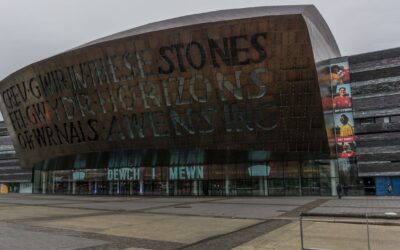
From the National Library of Wales to Bangor’s Language Technologies Unit, Wales holds a remarkable pool of expertise in organising knowledge. On 2 and 3 December 2026, the second ScholarTHON comes to Cardiff University, and we would love you to join us.
Resources
News on upcoming resources, tutorials, and more, provided by the Mapping the Arts and Humanities team.

Postcards from Nottingham III: Thinking about Infrastructure
Websites lapse, links break, and important history can slip through the digital cracks. Our third and final postcard from Nottingham steps back to...
Introducing Mapping the Humanities and AI
Deborah Lupton / Pop Chips / Licenced by CC-BY 4.0Today the Mapping the Arts and Humanities Project launches Mapping the Humanities and AI: a live,...

Postcards from Nottingham II: Digging into the Archives
Much of what we now call innovation began as grassroots practice. Our second postcard from Nottingham visits the archives and community...
Join our mailing list
Receive blogs as soon as they’re published, along with project updates and event information, plus special access to digital tools to help you make the most of the dataset.