
ScholarTHON: rethinking the hackathon for arts and humanities research
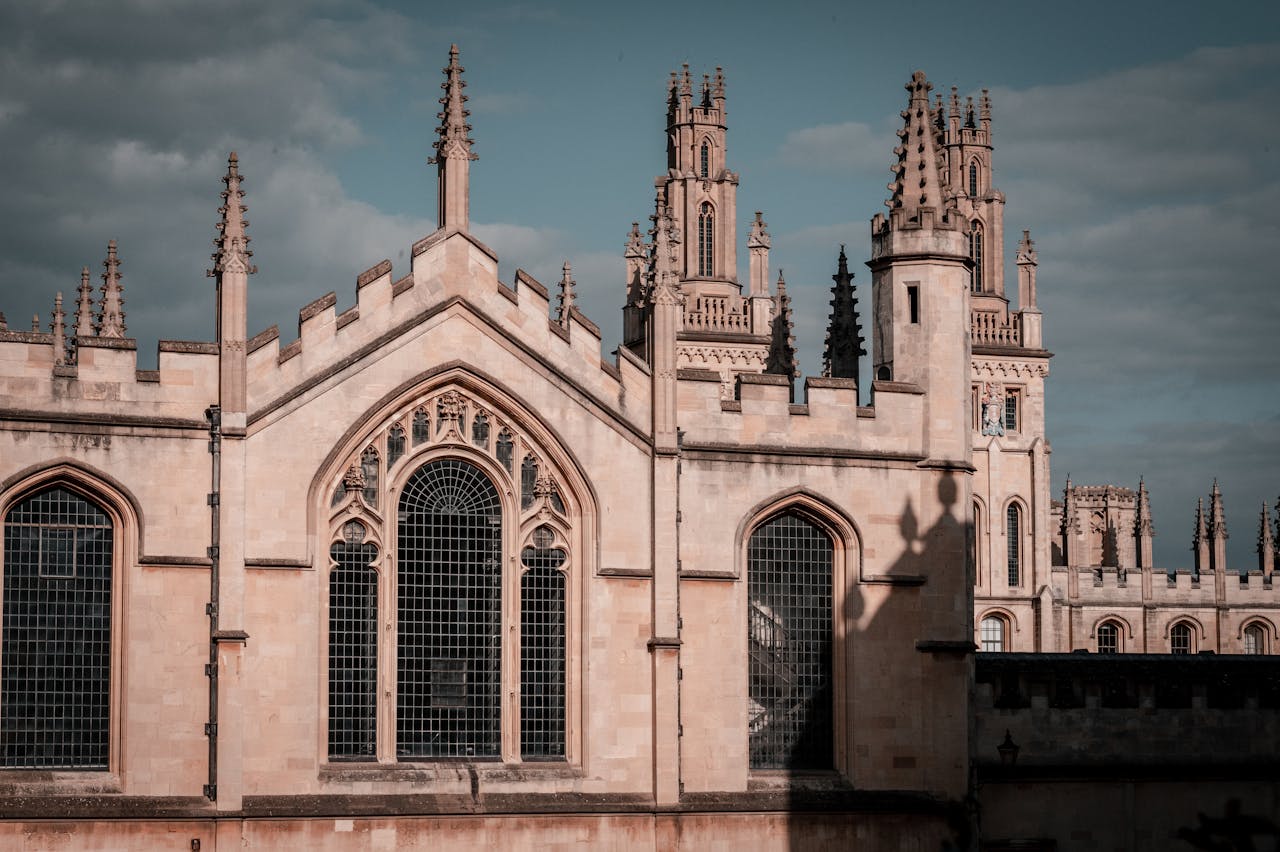
Hackathons emerged among software developers in the late 1990s, built around a particular kind of work. ScholarTHON, a two-day event on 2–3 June at Oxford’s Weston Library, rebuilds the format for arts and humanities research. MAHP is delighted to support it alongside the Data/Culture project, the Bodleian’s Centre for Digital Scholarship, and Digital Scholarship @Oxford. Registration is free; no coding experience required.
The Mapping the Arts and Humanities Project (MAHP) is delighted to be supporting the ScholarTHON, a pioneering two-day event reimagining the hackathon format for arts and humanities research.
Data/Culture is an AHRC-funded project that develops tools and communities to support sustainable digital research, connecting datasets, software, and researchers through a shared platform and collaborative activities. It forms part of the Infrastructure for Digital Arts and Humanities (iDAH), advancing new approaches to curation and access to complex data.
The event will take place on 2-3 June at the Centre for Digital Scholarship, Weston Library, Oxford. Registration is free. It is organised by the Data/Culture project in collaboration with the Centre for Digital Scholarship (Bodleian Libraries), Digital Scholarship @Oxford, and MAHP. Please note that places are limited.
Participants are strongly encouraged to attend both days in person, as the event is a collaborative endeavour with a competitive element and a prize for the winning group. No prior coding experience is required!
A made-to-measure hackathon for arts and humanities research
Hackathons emerged in the late 1990s among software developers as short, competitive sprints to build working code under tight deadlines. Digital humanities has been adapting the format since at least the mid-2010s – Helsinki’s Digital Humanities Hackathon has run annually since 2015, and Cambridge, Oxford, and Harvard have hosted versions of their own. That kind of term borrowing and exchange is generative as well as necessary. At the same time, assumptions are packed into those inherited vocabularies, and we sometimes find ourselves working within frames built for other fields. ScholarTHON takes the history of the hackathon forward and rebuilds the format around how arts and humanities researchers work, which in practice means research questions first, tools second.
Sector-wide efforts to redefine inherited vocabularies
This kind of work is happening term by term across the arts and humanities. For example, MAHP has been doing it with “infrastructure.” The word arrives weighted with strong connotations of hard, tangible structures. When we think of infrastructure, our mind often goes to things made of concrete and steel. Some examples include banks, hospitals, railways, labs.
Since the project’s initiation in 2022, we have been stretching the term to capture the human-based structures that hold the arts and humanities together. Bodies like ESFRI and the UK’s InfraPortal define research infrastructure around facilities and equipment (supercomputers, major scientific equipment, significant collections, computing systems) and the criteria they use to evaluate it tend toward scale and capital investment.
MAHP works with a wider definition because arts and humanities are organised around people, partnerships, and intellectual communities that extend across sectors and disciplines. In building the dataset, we kept encountering structures that standard criteria overlooked, leaving significant parts of the sector out of view.
By mapping the research centres, networks, learned societies, and communities of practice that hold the field together, we focus on the human and intellectual capacity that activates physical resources like galleries, libraries, archives, and collections: scholarly partnerships, knowledge exchange collectives, and the long-standing relationships across institutions that organise and nurture the work.
ScholarTHON is doing the same kind of work by reinterpreting what “hackathon” means and what it can be. It stretches an inherited term to fit the shape of arts and humanities research.
Across Data/Culture, this process of redefining inherited vocabularies is central to how we think about digital research infrastructure itself. The project approaches infrastructure, data, and tools as collaborative and interpretive environments shaped by the communities that use them. ScholarTHON reflects that ethos by reframing the hackathon not as a space primarily for accelerated technical production, but as a research environment where critical inquiry, experimentation, and interdisciplinary exchange can unfold together. In this sense, redefining terms is not simply rhetorical work; it is part of building research cultures and infrastructures that better reflect the practices, values, and questions of arts and humanities scholarship.
Who is the ScholarTHON for?
The ScholarTHON is open to researchers at any stage. It is likely to be especially useful for early-career researchers and PhD candidates, who often lack structured opportunities to engage with digital methods, and for more established scholars who haven’t had the chance to test what computational approaches could do for their own research questions.
Over two days, participants will get a working sense of what tools like VISE, WISE, Image Compare, or Image Annotator can and cannot do, work out which are right for their own material, refine their questions to a realistic scope, and leave with documented, reproducible workflows that other researchers can build on.
The winning group will receive ten hours of dedicated technical collaboration to take their prototype further, supporting longer-term research outputs and grant applications backed by tested methods.
Come along!
MAHP and Data/Culture will present together on the morning of Day 2, focusing on infrastructure visibility, network connections, ecosystem mapping, and collaboration pathways across the two projects.
If you work in art history, theatre and performance, classical studies, digital humanities, or heritage and museum studies, and your research engages with images, objects, performances, or other visual and material sources, ScholarTHON was built for you. And if you know colleagues or students who might benefit, please do share the call widely.
We look forward to seeing you there!
Registration: https://www.eventbrite.co.uk/e/1988909140780
For any questions contact: [email protected]
Dr Giovanna Di Martino is Community and Project Manager for Data/Culture at Oxford, Honorary Leventis Fellow at UCL (2024-2027), and Fellow at the Harvard’s Centre for Hellenic Studies (2026-2027).
Elena Zolotariov is the Mapping the Arts and Humanities Liaison Officer at the School of Advanced Study, University of London.
Postcards from Nottingham I: the Law and the Humanities Map at the British Legal History Conference
What happens when you put an infrastructure map on a table for three days and ask people whether it has represented them accurately? The Law and the Humanities Map went to the 27th British Legal History Conference in Nottingham to find out.
Law and the Humanities Map to debut new features at the British Legal History Conference
This week the Mapping the Arts and Humanities team is bringing a freshly upgraded Law and the Humanities Map to the 27th British Legal History Conference, hosted by the University of Nottingham from 1-4 July 2026.

Inside the ScholarTHON: a new kind of collaboration for the arts & humanities?
What happens when arts and humanities scholars and Research Software Engineers shape a research question together from the start? ScholarTHON spent two days at Oxford’s Weston Library finding out. Here’s what they made, what they said afterwards, and the four-stage journey that took them from question to workflow.

Out of the comfort zone: creative methods across law and the humanities
In this companion piece to the Mapping the Arts and Humanities Podcast, Professor Jacqueline Hodgson (University of Warwick), Dr Nicole Bögelein (University of Cologne), and Sophie Marois (University of Toronto) discuss what creative practice brings to research in law, policing, and criminology and how a map might better represent the cross-sector work it depends on.

The Law and the Humanities Map at the SLSA Conference 2026
The Law and the Humanities Map made its first in-person appearance at the Socio-Legal Studies...
Join our mailing list
Receive blogs as soon as they’re published, along with project updates and event information, plus special access to digital tools to help you make the most of the dataset.