
Postcards from Nottingham I: the Law and the Humanities Map at the British Legal History Conference
What happens when you put an infrastructure map on a table for three days and ask people whether it has represented them accurately? The Law and the Humanities Map went to the 27th British Legal History Conference in Nottingham to find out.
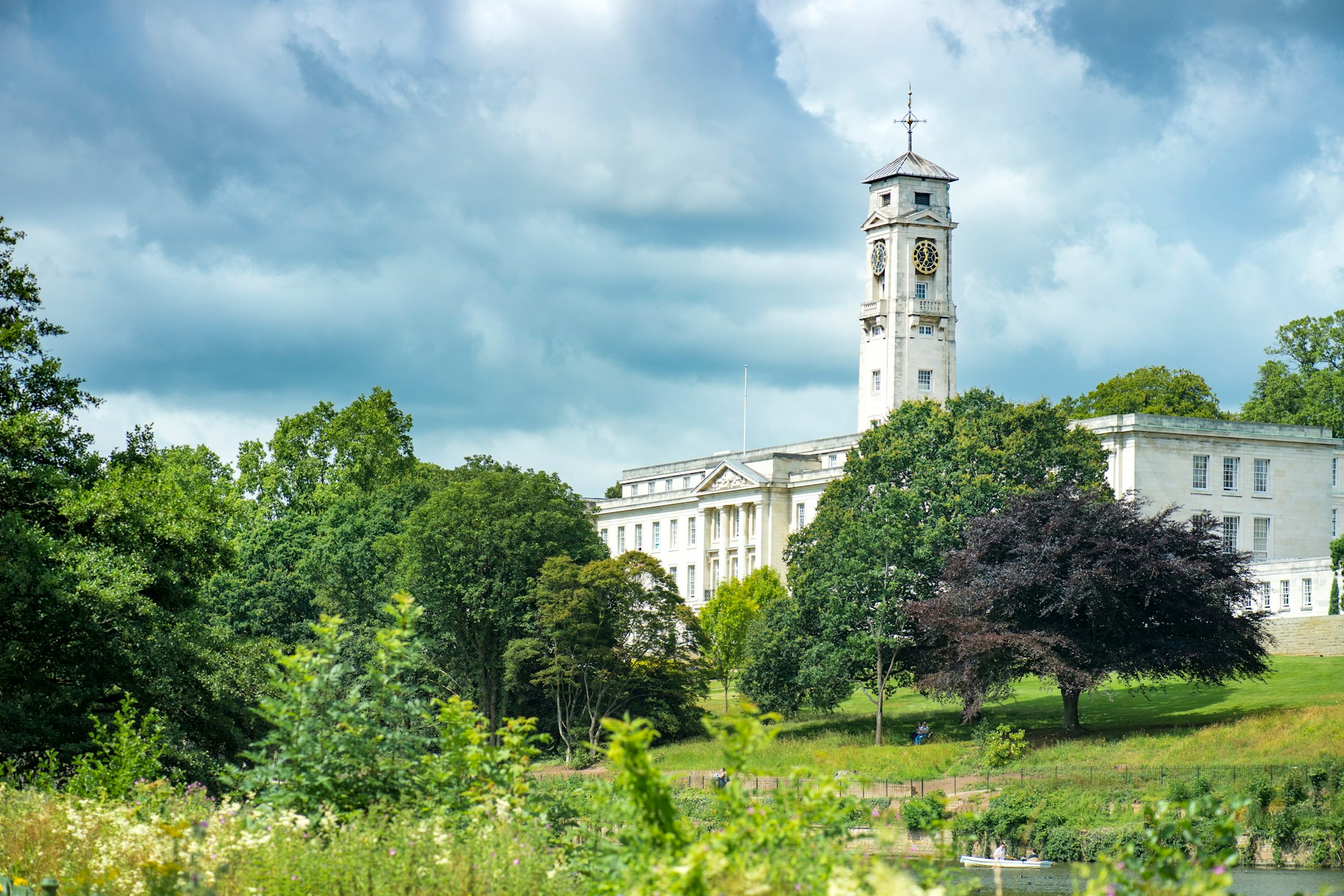
On the 1 July 2026, the Law and the Humanities Map travelled to the 27th British Legal History Conference, hosted by the University of Nottingham from 1 to 4 July 2026 under the theme of “Law and Governance.” Our warmest thanks to the organisers for welcoming us!
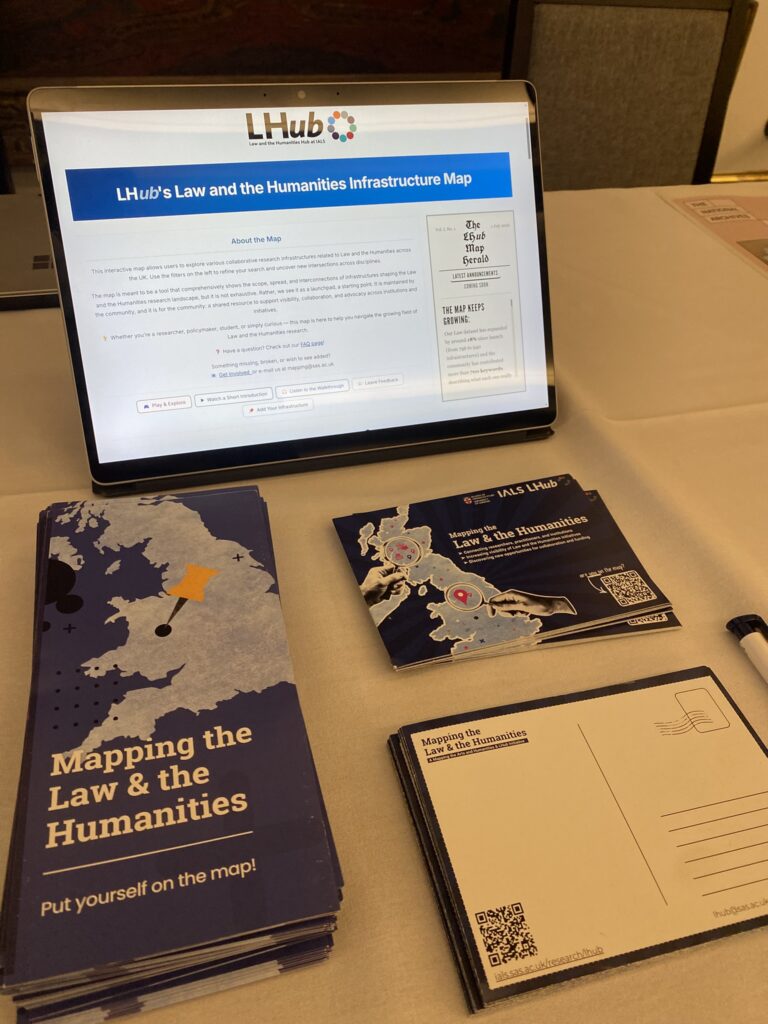
We arrived with a stack of postcards and a freshly upgraded map. We left with new entries for the dataset, a feature wish-list, and four days of conversations about the structures that keep legal history running.
If you missed the map’s new features – keyword filtering, clickable word clouds, Play & Explore, our pre-conference post has the full tour.
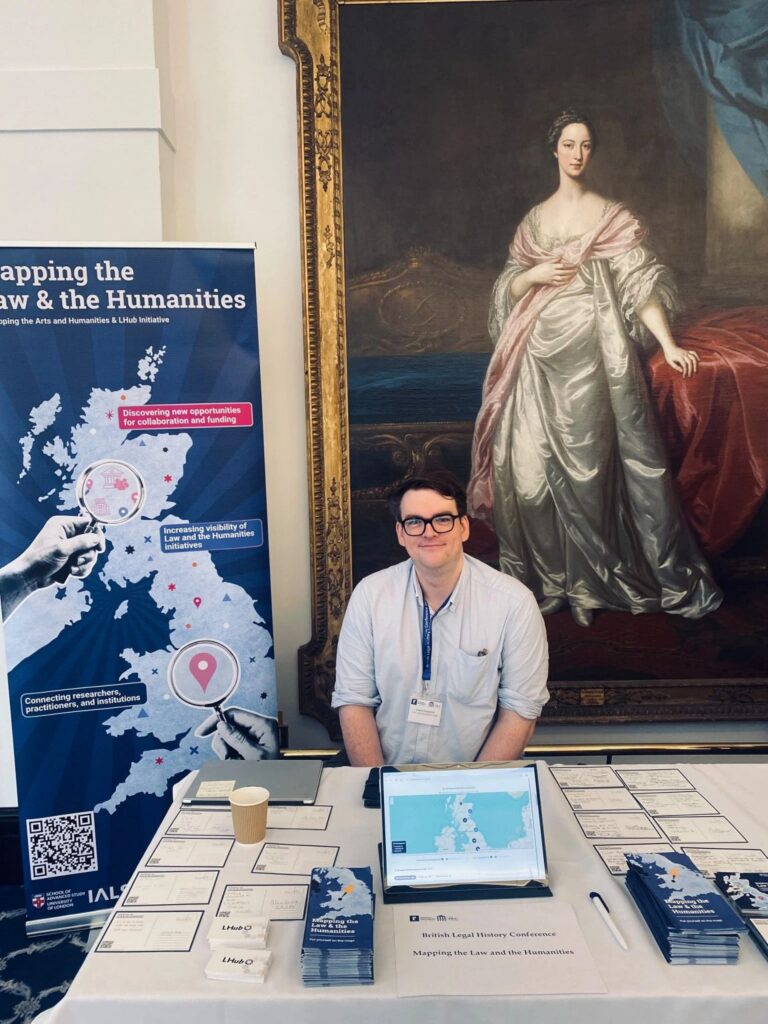
Three days at the table
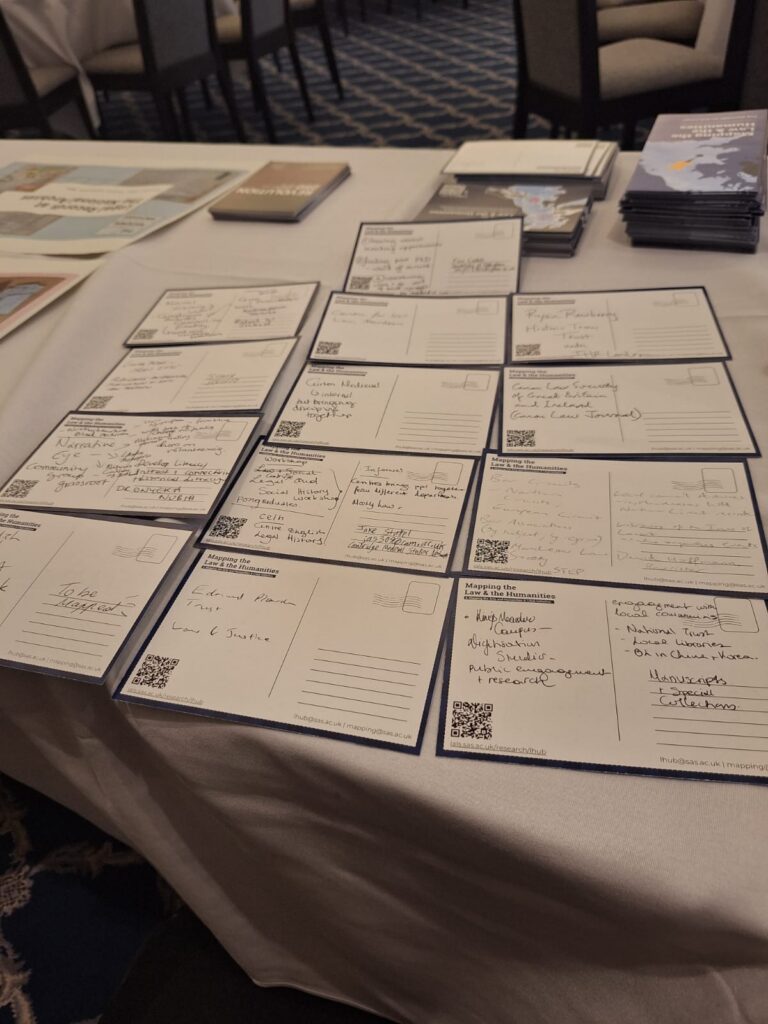
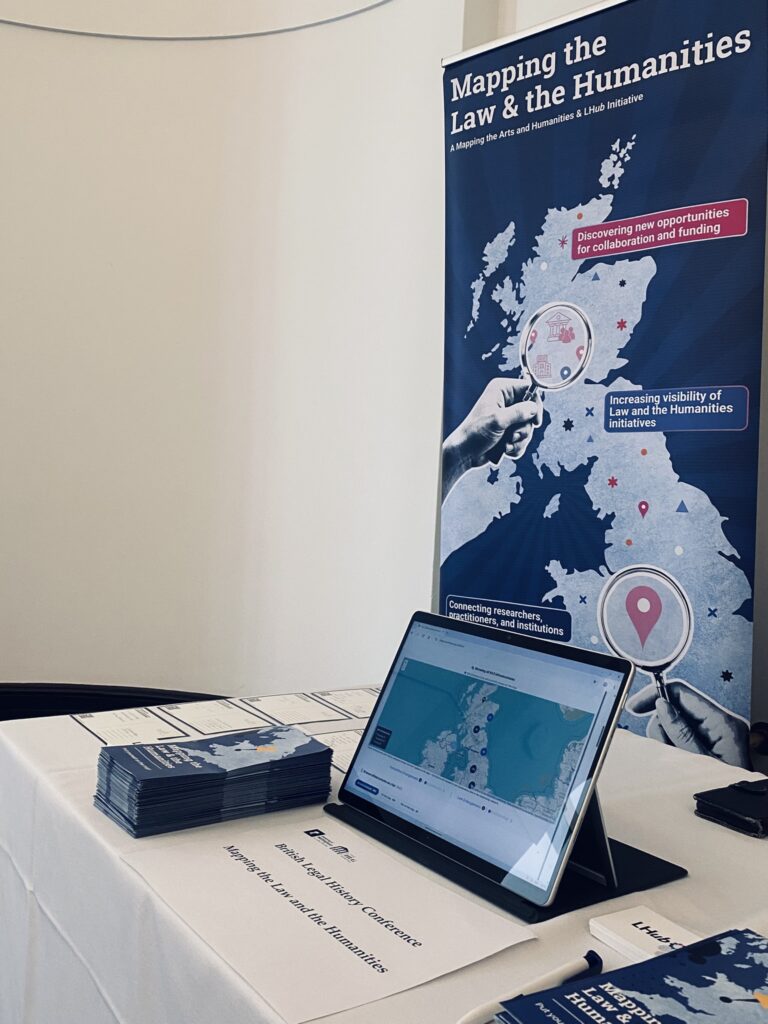
The Mapping the Law and the Humanities Team was stationed at a conference table (turns out it is a fine research instrument!) between the 1st and 3rd of July. Delegates stopped by to explore the map, pick up a postcard and add to the wish-list. Others poked and prodded the filters and the word clouds while we compiled a small taxonomy of responses. We noticed the contemplative nod, the narrowed eye, the scratch of a chin, the smile of recognition when someone found themselves on the map, followed, almost always, by a dive back into the records, one in Cardiff, another in Edinburgh. ”Have you thought of adding this or that? What about grassroot collectives?”
One of the most valuable exercises at the table was the live record check. We would pull up a visitor’s record together and ask, “Have we represented you accurately?” And as it often happens, one question led to another. Discussions ranged from how the sector represents itself to the sort of information a website should provide, what we look for when we collect data, why collaborations so often go unmentioned, and how a few sparse pages can undersell decades of work.
With some delegates, we discussed how discovery still runs largely on word of mouth: supervisors tell students about societies, colleagues pass on workshops. Word of mouth is an infrastructure in its own right, though an invisible and unfunded one, and it only really works for people already inside the room. Making the rest visible is the map’s job.
Over this blog, and in upcoming posts, we will be reflecting upon some of the infrastructures we met in those conversations. Each does work worth knowing about; several were new to the map and it was a great opportunity to hear what they do, who they bring together, and how they keep going.
The infrastructure behind the conference
The History of Law and Governance Centre (HLGC), which hosted the British Legal History Conference this year, is an interdisciplinary research centre in the University of Nottingham’s School of Law, co-directed by Dr Will Eves, Dr Edward Goodwin and Dr Sarah White. The Centre launched in 2023 with the inaugural annual lecture titled “Historians, Lawyers, and the Varieties of Legal History”, which in many ways set the tone. The Centre is a focal point for research into the historical development of law, legal institutions and ideas of governance.
Its membership stretches across Law, History, Classics and Archaeology, Politics, Criminology and the university’s Manuscripts and Special Collections, with research running from the medieval origins of the common law and easements after the Enclosure Acts to the New Poor Laws, the workhouse regime and twentieth-century international law.
The Centre’s yearly programmes consist of annual lectures, research seminars, reading groups and knowledge-exchange sessions that have ranged from the university’s own collections to a BBC journalist on how lawyers and historians can talk to the press. The reach is international (recent speakers have joined from Italy and Brazil), and the annual lecture topics have ranged from legal pluralism in the Middle Ages to precedent and sovereignty in early-modern equity.
Reflecting on the conference and the Centre’s aims, Sarah told us:
The conference’s theme of ‘Law and Governance’ invited us to think about law not as an isolated body of rules, but as something shaped by institutions, communities, and cultures. The British Legal History Conference provided a valuable space for those conversations, bringing together lawyers, historians, and archivists whose work demonstrates the richness of legal history across disciplines. Those exchanges are especially important to the work of the History of Law and Governance Centre, the aim of which is to foster dialogue across subjects and periods. We hope the conference has strengthened existing connections and inspired new ones, and we look forward to seeing the conversations it has sparked continue well beyond the event itself.
Manuscripts and Special Collections: the hosts’ collections and collaborations
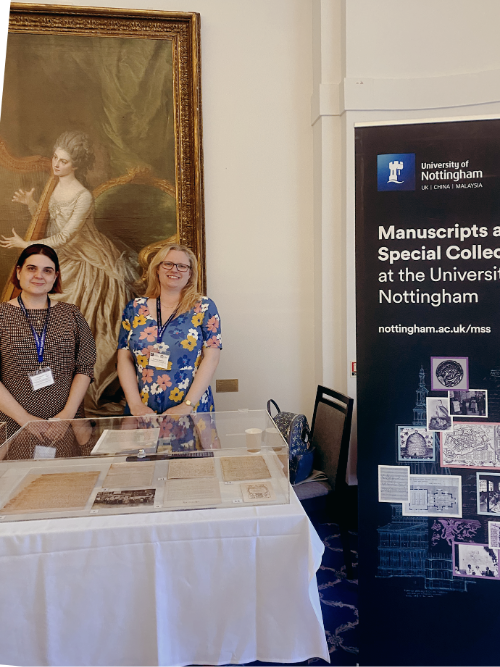 We could hardly visit Nottingham without spotlighting our hosts’ own holdings. The University of Nottingham has been collecting manuscripts and archives for almost a century; its Manuscripts and Special Collections at Kings Meadow Campus now holds over 3.5 million items across more than 800 collections, from the papers of Nottinghamshire’s great estates to the records of the Archdeaconry of Nottinghamshire, rich in church court material that legal historians will know well, alongside celebrated D.H. Lawrence collections.
The collections’ reach turns out to be as varied as the infrastructure itself. Collections of this kind are usually described as holdings and yet they behave more like connectors, linking the university to national institutions, local libraries and communities of volunteers and enthusiasts.
Working with the National Trust, the team drew on the archives and estate records of the Dukes of Newcastle to help bring the now-demolished ducal mansion at Clumber Park back to life. Manuscripts from the collections, including material relating to D.H. Lawrence and the Earl of Rochester, travelled further still: they were lent to “Writers Revealed”, a touring exhibition co-curated by the British Library and the National Portrait Gallery that toured Shanghai and South Korea, a reminder that special collections can act as a form of soft power and transnational knowledge exchange. Closer to home, the collections work with Nottinghamshire Libraries on “Women in Red”, training local volunteers to improve the representation of women on Wikipedia, and lend regularly to regional museums. They also support research and teaching across the sector, from Nottingham Trent University’s “Teaching Medieval Women” project to the University of Leicester’s Leverhulme Centre for Humanity and Space.
Manuscripts and Special Collections has established an active culture of participation, and this becomes apparent in the projects and opportunities it offers. One project, based on its Plants and Prayers exhibition on health and healing before 1700, brought volunteers together as an Early Modern Medicine Research Group to transcribe historic recipe books, logging the ingredients and the ailments they were meant to cure into a database so that researchers could search them more easily. The results ranged from the scholarly to the delightfully unexpected: a comic sketch performed between a lady and an apothecary, and an analysis of whether the remedies for scurvy actually contained any vitamin C. Only about a third of them did.
For the team, the value of this work is measured as much in people as in projects. As Kathryn Steenson of Manuscripts and Special Collections puts it:
One of the things I love most about working with students and communities is their reactions to getting hands-on with archives for the first time. Some people have been moved to tears, others have changed their career plans because they’ve discovered a passion for heritage they didn’t know they had. It’s a reminder that it’s a real privilege to be able to work with and share these wonderful collections.
Are you on the map?
As we have said before, the map is very much a living resource. If you lead or belong to an infrastructure at the meeting point of law and the humanities (a centre, society, archive, network, workshop, or something our categories have not caught up with yet) you can check your record to make sure you are adequately represented, or add one.
This summer we are also running our annual catch-up exercise, reaching out to infrastructures to confirm what is running and how the field is faring. Write to us at mapping@sas.ac.uk. If the conversations above show anything, it is that what an infrastructure puts into the public record can determine who finds it.
📍Are you on the map? Check here. |🗺️ Explore the map | Add your infrastructure |📥Get in touch → mapping@sas.ac.uk
James Campbell is a DPhil candidate at the Centre for Socio-Legal Studies, University of Oxford, and a Visiting Fellow at IALS’ Law and the Humanities Hub (2024-25).
Elena Zolotariov is the Mapping the Arts and Humanities Liaison Officer.

Postcards from Nottingham III: Thinking about Infrastructure
Websites lapse, links break, and important history can slip through the digital cracks. Our third and final postcard from Nottingham steps back to think about the shapes research infrastructure takes: centres inside universities, a new network on a two-year pilot, learned societies run on subscriptions, and a charity that maps Britain’s towns from the ground up.

Postcards from Nottingham II: Digging into the Archives
Much of what we now call innovation began as grassroots practice. Our second postcard from...
Law and the Humanities Map to debut new features at the British Legal History Conference
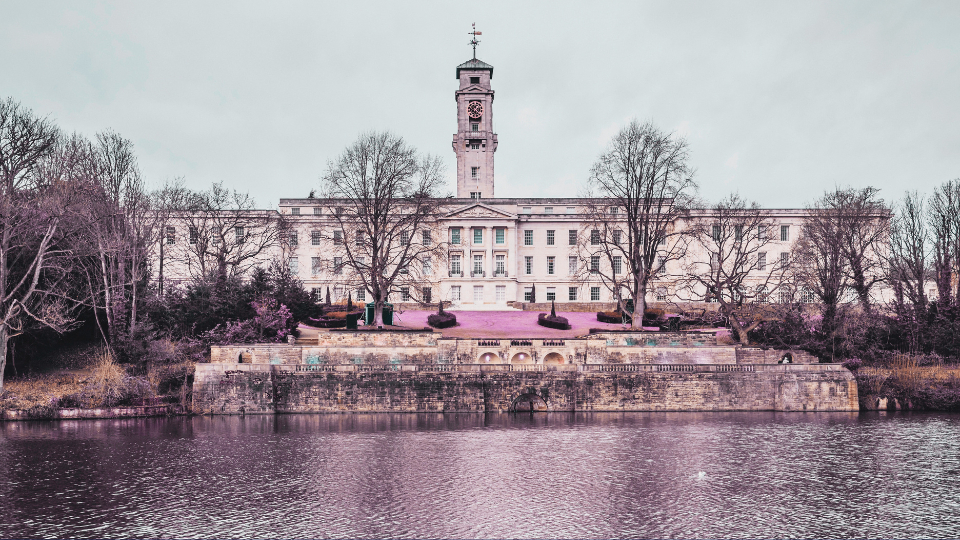
This week the Mapping the Arts and Humanities team is bringing a freshly upgraded Law and the Humanities Map to the 27th British Legal History Conference, hosted by the University of Nottingham from 1-4 July 2026.

The Law and the Humanities Map at the SLSA Conference 2026
The Law and the Humanities Map made its first in-person appearance at the Socio-Legal Studies...

Law and the Humanities in Practice: Voices from the Sector
Across universities and cultural institutions, there is a growing recognition that the discipline...
Join our mailing list
Receive blogs as soon as they're published, along with project updates and event information, plus special access to digital tools to help you make the most of the dataset.