
Postcards from Nottingham II: Digging into the Archives

Much of what we now call innovation began as grassroots practice. Our second postcard from Nottingham visits the archives and community organisations doing that crucial work (collecting, preserving, and connecting people to their own histories) and introduces the map’s new “Third sector” infrastructure type.
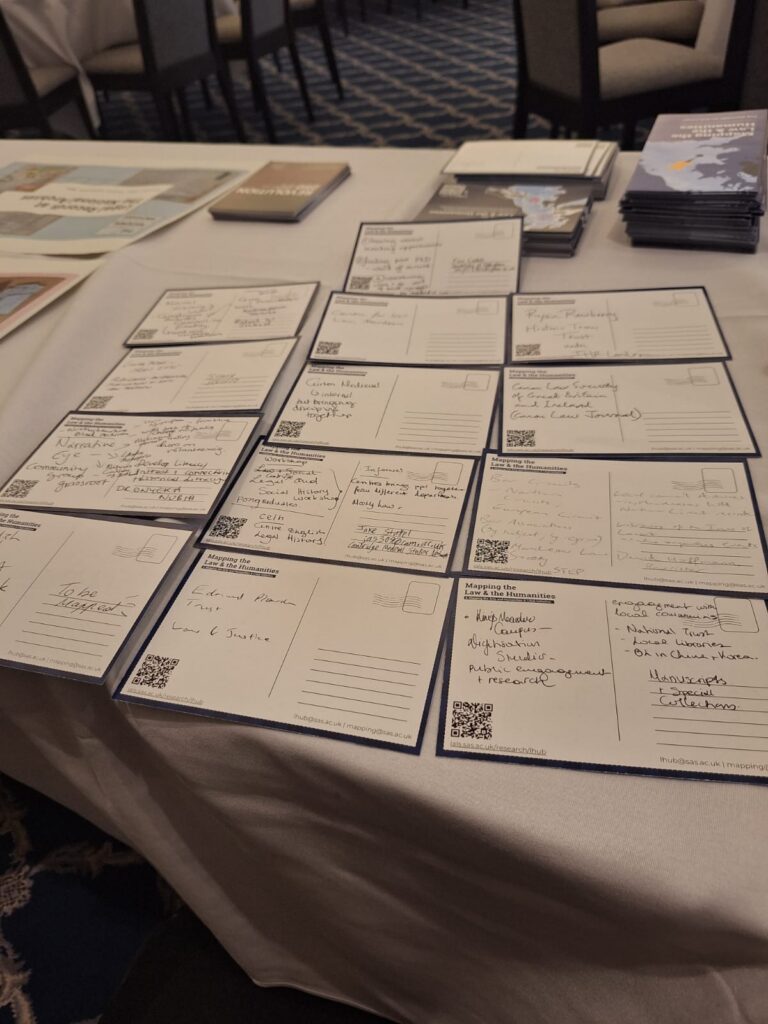
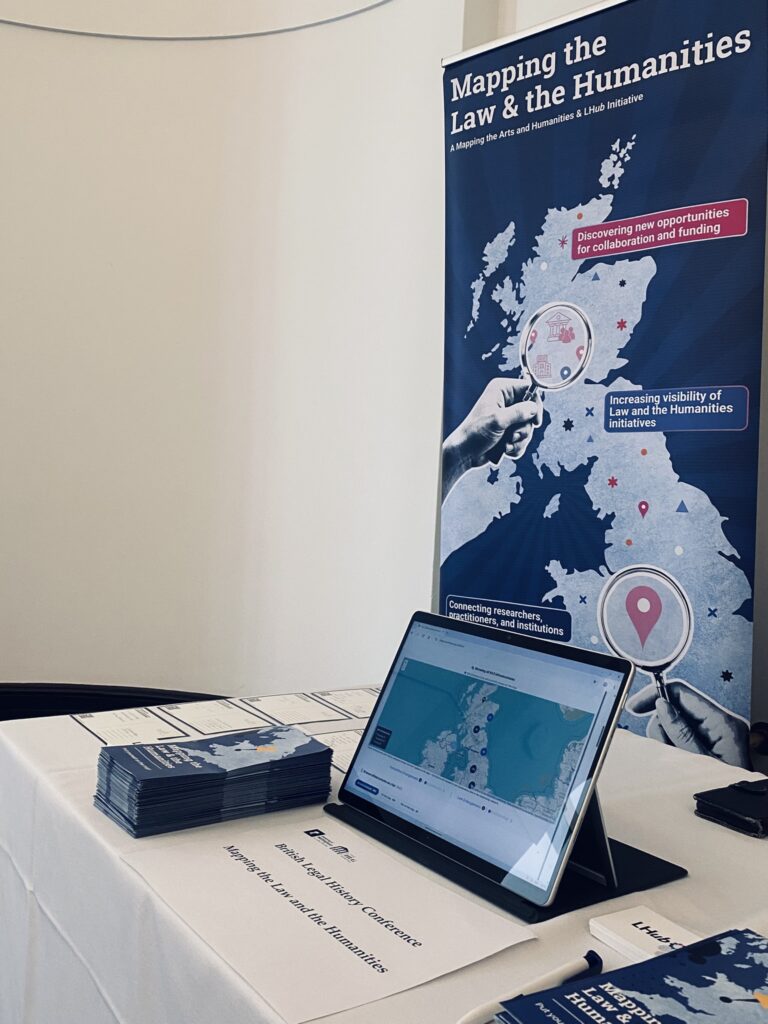
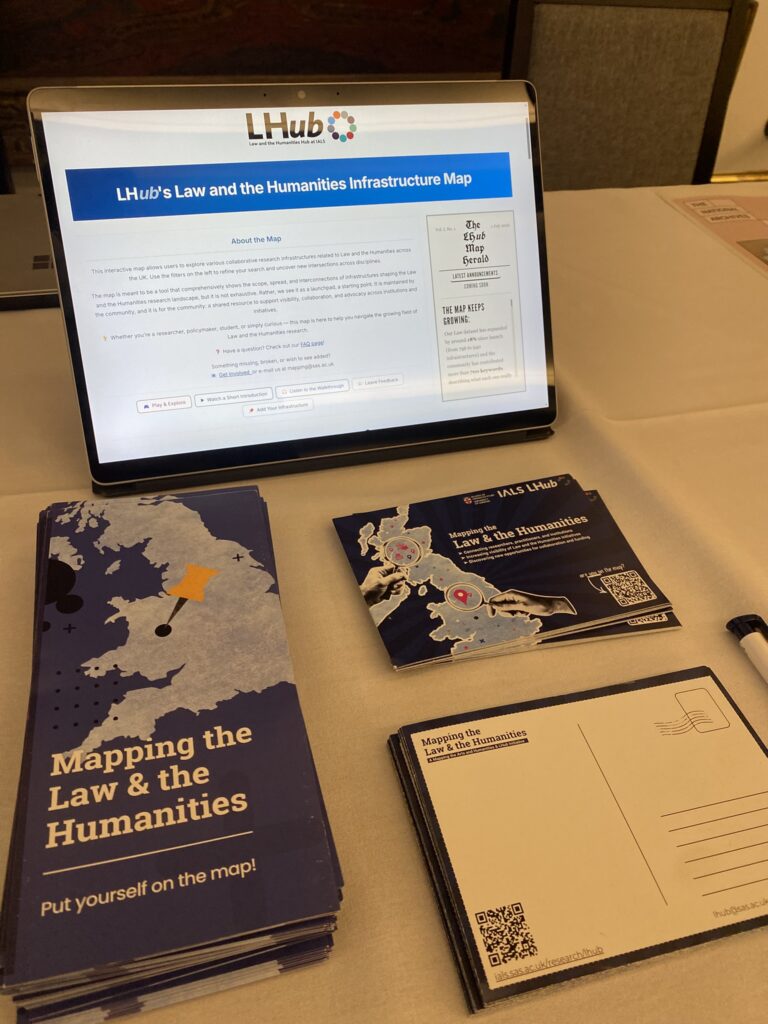
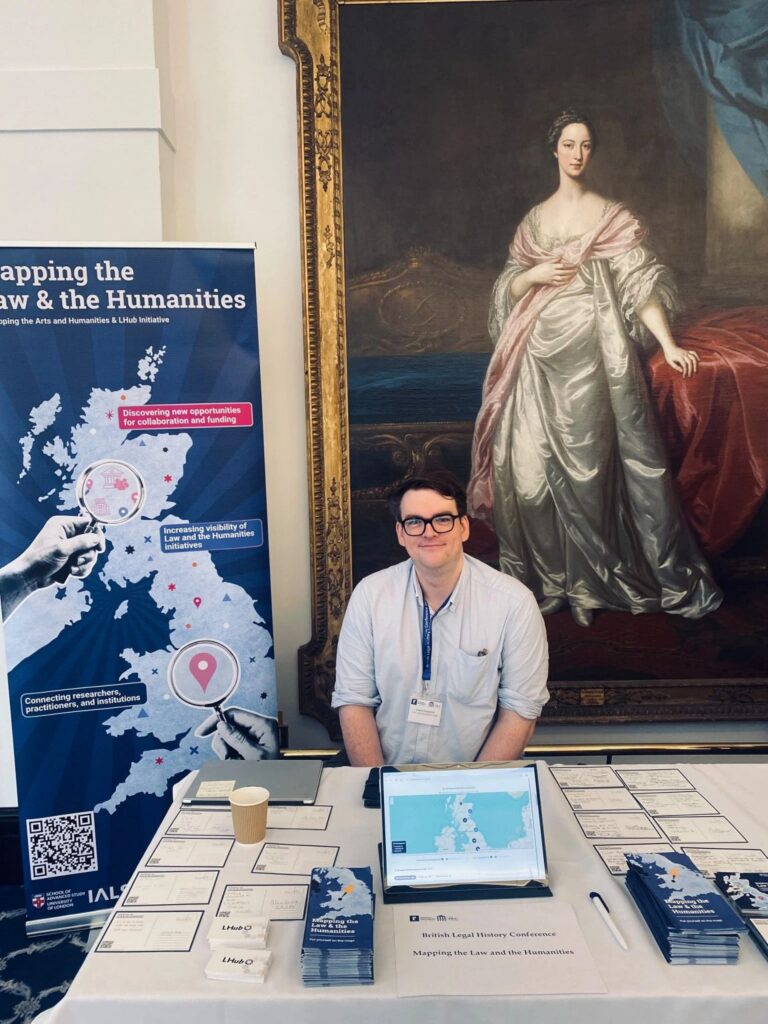
Ask a legal historian where the field’s treasures are kept and you will be sent somewhere unexpected: a town hall in Aberystwyth, a community archive in Nottingham, a minute book in a Manchester library. Building on our first postcard from Nottingham, in this blog we are focusing on archives. At the British Legal History Conference, we were fortunate enough to be sharing a table with The National Archives. No doubt many readers will be familiar with the wealth of resources available at Kew, and some may even have had access to them to pursue their research. One American academic speaking to us remarked that, even years later, he still could not believe they actually let him handle the remarkable documents he needed for his doctoral work! Not only are their holdings exceptional, but Dr Daniel Gosling (Principal Legal Records Specialist) with whom we were sitting, is an approachable and hugely knowledgeable point of contact for anyone interested but hesitant about digging into the archives.
That archives would frequently arise in discussions with legal historians is perhaps unsurprising. The thematic diversity and geographical spread of the archives we were recommended to map, however, certainly was. Some of these were highly specialised, whilst others were holdings in unexpected places. All were less well-known collections of considerable value to researchers across the spectrum of the Law and the Humanities.
How we think about archives, in particular these more unorthodox ones, poses challenges for mapping. Typically, they are unlike university-based research centres; they do different things, offer different services, and often do what they do differently. But whilst they may not produce research in their own right, they are clearly part of the research landscape, a vital node within the Law and the Humanities ecosystem. As such, archives of various shapes and sizes ought to be mapped as infrastructures and represented as being of equal importance to those places from where research outputs emerge. We hope the case studies below convey something of this significance, breadth, and variety.
Nottingham Black Archive and Narrative Eye: Exploring the past, deciphering the present
 We had the pleasure of talking with Dr Onyeka Nubia (Assistant Professor of History at Nottingham, serendipitously enough an IALS, LLM alumnus!) about sitting on either side of the university/grassroots line. The conversation naturally led to the genealogy of terms. Much of what universities now describe as innovation (co-creation, participatory research) began as grassroots vocabulary and practice long before higher education absorbed it, and that lineage should be visible. The recurring word was how. Mapping community organisations, and the ways they work with universities and the GLAM sector, is part of how some of that advocacy work can happen, magnifying vital research already happening on the ground, bringing HEIs and community groups together, visible in the same space, on the same map.
We are delighted that Nottingham Black Archive and Narrative Eye are now represented on the map! We are also delighted to share a bigger change alongside them – the map has gained a new “Third sector” infrastructure type, encompassing grassroots initiatives, charities and other organisations that enable research and knowledge dissemination beyond the academy.
Nottingham Black Archive is a case in point, and an infrastructure that was not previously on the map. Founded in 2009-10 by the illustrious and innovative Dr Panya Banjoko, with a mission of “keeping the past in the present,” the Archive researches, collects and preserves Black history, heritage and culture in Nottingham: oral histories of the Windrush generation and of WWII RAF servicemen, photographs, political letters, organisational papers. Its collaborations run across the city and the sector (the University of Nottingham, New Art Exchange, the National Justice Museum, Nottingham Photographers Hub, Nottingham Playhouse) and nearly all of it happens on volunteer labour.
Another community-based organisation is Narrative Eye, with a record stretching back to 2001: an independent Black heritage organisation dedicated to researching, promoting and sharing the histories and contributions of people of African descent in Britain. Working across heritage, education, culture and community engagement, they develop research, exhibitions, plays, films, courses and workshops with academic, cultural, and community partners. Narrative Eye is committed to bringing overlooked histories and lived experiences to the forefront, and to recognising the significance of Black British presence throughout Britain’s social, cultural, and legal development. None of it rests on core funding; project grants and volunteer hours sustain the infrastructure.
Onyeka told us:
HE [higher education] has so much to learn from the methodologies, curricula, and ethos of community education. Only by stepping down from the perceived position of superiority, will HE survive and remain relevant.
Ceredigion Archives: Pounding the beat
 Richard Ireland (legal historian, long of Aberystwyth, and author of A Want of Order and Good Discipline) pointed us west. Ceredigion Archives, the county record office housed in Aberystwyth Town Hall, holds the county’s court records, gaol records, estate papers and parish registers, and puts them to public work.
One example of that work is “Pounding the Beat”, a free downloadable trail that explores crime and punishment through the streets of Aberystwyth; an active blog runs an occasional and popular Crime and Punishment series, with Richard himself as a regular guest author.
Council-run and classified under local government instead of research (though there is plenty of research in what they do), archives like this are also crucial bridges, and knowledge exchange is their daily trade: they carry research-based knowledge into forms that are accessible, friendly and reachable. Following Richard’s recommendation, Ceredigion Archives and the National Library of Wales are now on the map!
As Richard puts it:
As a historian of crime and punishment I’ve spent many pleasurable hours researching in local Archives, not least my own local one in Ceredigion. Not only do visits allow engagement with actual documents, so much more rewarding than digital images, but they change the perspective of study away from the concentration on urban and metropolitan events and the emphasis on serious crime to the everyday experience of crime and criminality of ordinary people throughout the country. Local archives hold wonderful resources. Get to know your own!
The Manchester City Archives: Uncovering the History of the Northern Circuit
 The academic value of local and public repositories was a topic that also came up in conversation with the barrister David Hoffman. An experienced commercial litigator and Alternative Dispute Resolution practitioner, as a researcher, David is interested in the history of the legal professions, specifically the Northern Circuit of the English Bar. We discussed how, when studying lawyers and their professional groupings, it can be challenging to know where to start. Where might untapped archives exist? Who are the epistemic gatekeepers one must speak with to gain access?
Relevant infrastructures in this area may look rather different to traditional university-based research centres. For those working on the history or sociology of the legal professions, organisations including law societies, bar associations, and the Inns of Court may hold vital resources. Although these bodies might not directly produce research, they hold libraries, archives, and records, host lectures and events, and are an immediate point of contact for researchers looking to gain local knowledge.
Like Richard, David notes the important place public archives can hold in the research landscape. His work on the history of the Northern Circuit of the English Bar took him to the Manchester City Archives at Manchester Central Library. Various records here, such as detailed minute books, provide invaluable insight into the lives, and work, of lawyers over the years. For scholars this serves as a twofold reminder: firstly, that legal history can be local history (and vice versa), and secondly, that legal history may be found locally. Moreover, for mapping the field of the Law and the Humanities, this suggests that a wider concept of research infrastructure which includes public and local sites is needed.
David reflects:
The Northern Circuit records are a good example of the sort of material which might be archived locally and not really picked up on by historians, since they are accessible at Manchester Library. It was a surprise to me when I first looked into what there was and discovered that they went back to 1763. Some years later, I am nearly ready to publish an edition of the first 40 years, which are notebooks recording proceedings at formal dinners of barristers on circuit for the assizes for that period. I think it shows that there is much of interest if it can be identified in local archives.
Are you on the map?
As we have said before, the map is very much a living resource. If you lead or belong to an infrastructure at the meeting point of law and the humanities (a centre, society, archive, network, workshop, or something our categories have not caught up with yet) you can check your record to make sure you are adequately represented, or add one.
This summer we are also running our annual catch-up exercise, reaching out to infrastructures to confirm what is running and how the field is faring. Write to us at mapping@sas.ac.uk. If the conversations above show anything, it is that what an infrastructure puts into the public record can determine who finds it.
📍Are you on the map? Check here. |🗺️ Explore the map | Add your infrastructure |📥Get in touch → mapping@sas.ac.uk
James Campbell is a DPhil candidate at the Centre for Socio-Legal Studies, University of Oxford, and a Visiting Fellow at IALS’ Law and the Humanities Hub (2024-25).
Elena Zolotariov is the Mapping the Arts and Humanities Liaison Officer.
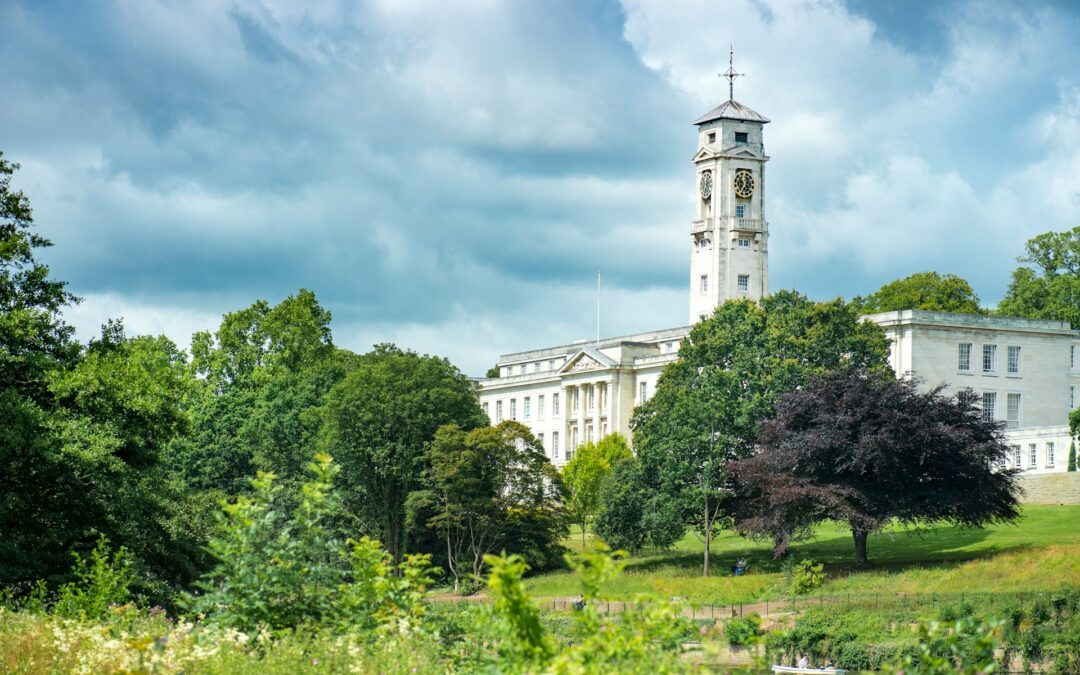
Postcards from Nottingham I: the Law and the Humanities Map at the British Legal History Conference
What happens when you put an infrastructure map on a table for three days and ask people whether it has represented them accurately? The Law and the Humanities Map went to the 27th British Legal History Conference in Nottingham to find out.

Law and the Humanities Map to debut new features at the British Legal History Conference
This week the Mapping the Arts and Humanities team is bringing a freshly upgraded Law and the Humanities Map to the 27th British Legal History Conference, hosted by the University of Nottingham from 1-4 July 2026.

The Law and the Humanities Map at the SLSA Conference 2026
The Law and the Humanities Map made its first in-person appearance at the Socio-Legal Studies...

Law and the Humanities in Practice: Voices from the Sector
Across universities and cultural institutions, there is a growing recognition that the discipline...

Law and the Humanities: A Disciplinary Cartography
James Campbell (Centre for Socio-Legal Studies, Oxford) joins us on the Mapping the Arts and...

Introducing LHub’s Law and the Humanities Map
This blog post shares key findings from recent focus groups on LHub’s Law and the Humanities Map....

LHub’s Law and the Humanities Map – FAQ
This FAQ is here to help you get the most out of the Law and the Humanities Map. It covers...

Launching Soon: Law and the Humanities Infrastructure Map
LHub and MAHP are launching a new open-access map dedicated to Law and Humanities research...
Join our mailing list
Receive blogs as soon as they're published, along with project updates and event information, plus special access to digital tools to help you make the most of the dataset.