Frame, model, connect: what’s on at ScholarTHON in Cardiff
Here is what we have planned for our two-day event at Cardiff University on 2 and 3 December 2026, featuring talks and hands-on workshops on ontologies, Linked Open Data, OpenRefine, and a roundtable on research infrastructure. Supported by the Arts and Humanities Research Council, The Social History Archive, Digital Humanities Craft OG and Cardiff University’s School of Journalism, Media and Culture (JOMEC), ScholarTHON is free to attend, with up to five £200 bursaries to help with the costs of joining us.
We are delighted to share with you the full programme for the second ScholarTHON on ‘Organising Knowledge’, which takes place at Cardiff University on Wednesday 2 and Thursday 3 December 2026 (you can read the full call here and why we are heading to Wales here). The two days follow one path: from knowledge organisation and ontologies, through metadata, Python, OpenRefine and linked data, to research infrastructure, sustainability, and community.
Day One: Frame · Model · Organise
On Day One, Giovanna Di Martino (Data/Culture, University of Oxford) and Jenny Kidd (Cardiff University) open the event, and Alex Cline (Queen Mary University of London) then asks how we can represent complex humanities knowledge in ways that make sense to researchers and to computers, with an introduction to conceptual modelling, ontologies and semantic relationships. Matilda Peruzzo (University of Oxford) and Elena Zolotariov (Mapping the Arts and Humanities) follow with ‘From Records to Networks’, on graph thinking for humanities data, with Python as a practical tool for exploring cultural heritage datasets.
After lunch, Kunika Kono (School of Advanced Study) leads a hands-on session on cleaning, reconciling and enriching metadata with OpenRefine. Groups then form around their research questions (What knowledge are you organising? Who creates the categories? What relationships matter?) and begin building a knowledge model of their own.
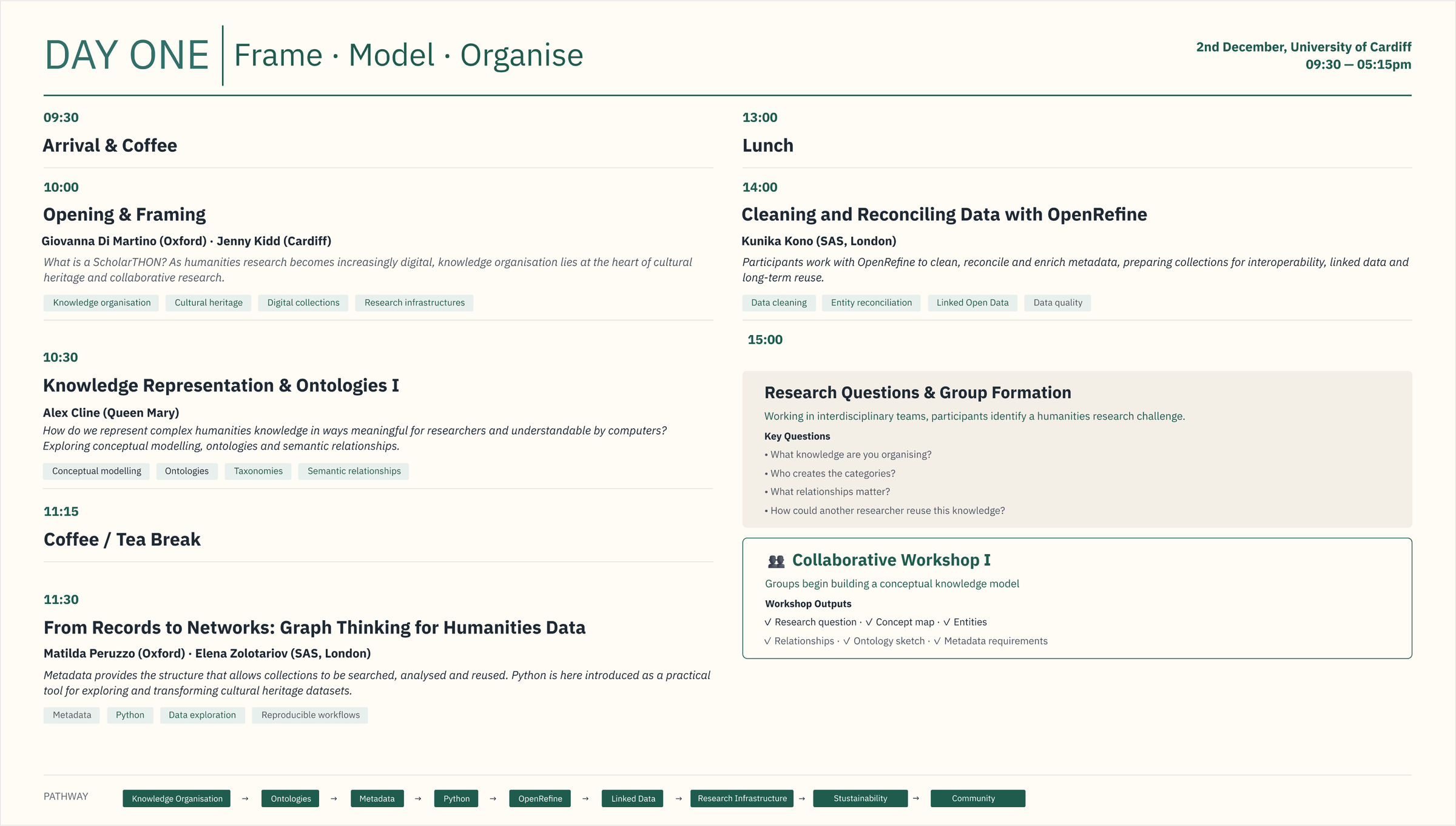
Day One programme (click to open both days as a PDF)
Day Two: Connect · Apply · Share
Day Two opens with three case studies on infrastructure and open data:
- Managing Authority with Linked Open Data: Jason Evans (National Library of Wales) on how the Library has been enriching its metadata with linked open data, and how that data can aid research and support the AI-powered services of the future.
- Computational Philosophy, Digital Ontology and Data Visualisation: David Freeborn (Computational Philosophy Lab, Northeastern University London) on how computational methods and interactive visualisations can reveal patterns in philosophical knowledge that are difficult to see through conventional methods.
- Creating free digital archives with GitHub Pages and Collection Builder: Alison Harvey (Special Collections and Archives, Cardiff University) on publishing zero-cost, sustainable and citable digital archives, powered by a single spreadsheet.
Giovanna then chairs a roundtable on infrastructure for digital arts and humanities with Arianna Ciula (King’s Digital Lab), Pieter François (University of Oxford), Jenny McHugh (UK-Ireland Digital Humanities Association), Joan Murphy (DARIAH-IE) and Jane Winters (School of Advanced Study).
Groups then spend the rest of the day turning their first sketches into knowledge models that others could reuse. Each group presents its proposal to a jury at 16:00, and the winning team will receive ten hours of dedicated collaboration with a Research Software Engineer to take its ideas further.
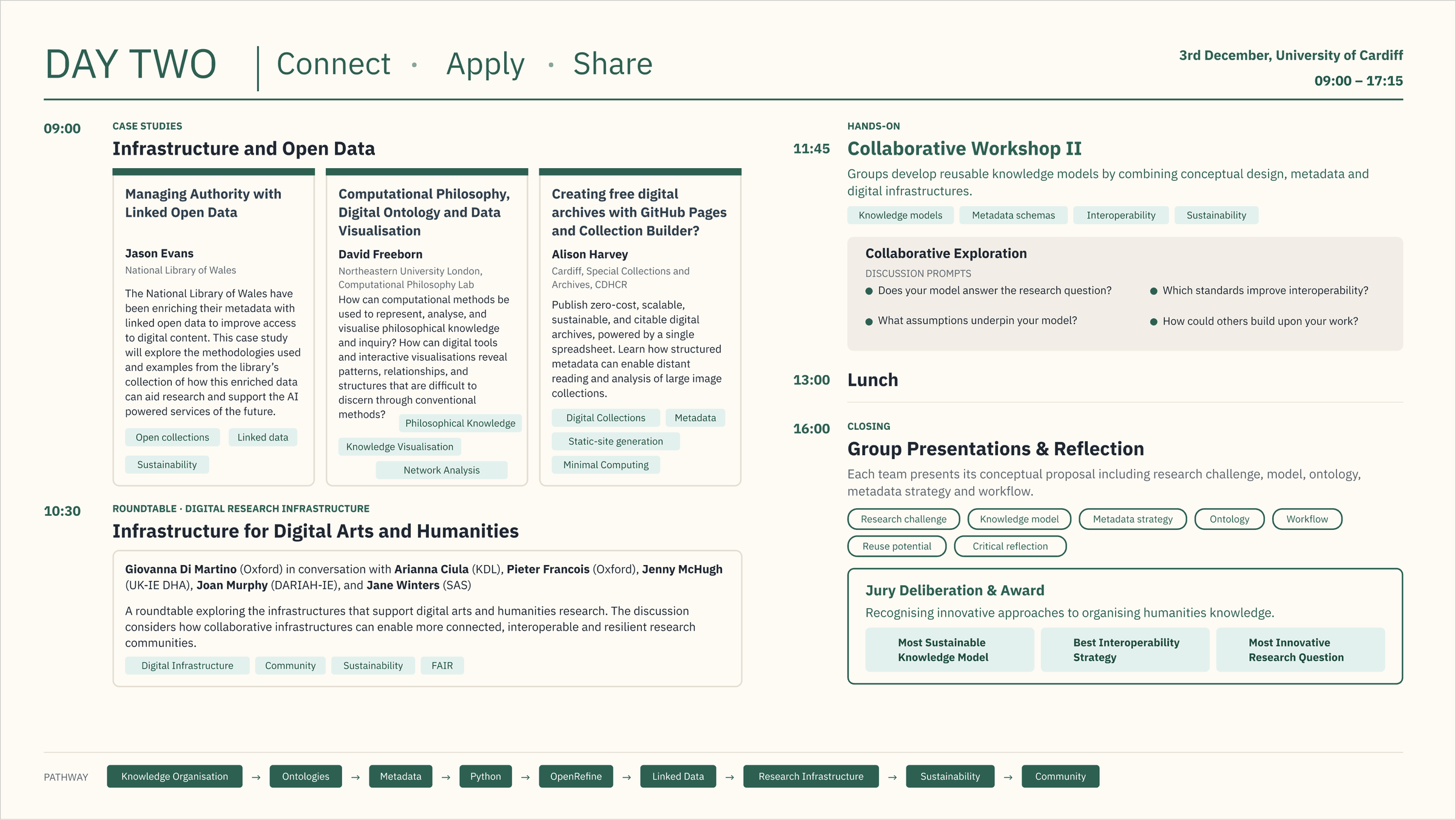
Day Two programme (click to open both days as a PDF)
Come along!
Over lunch, our Common Interests Tables will bring together participants, project teams and PIs working on related questions, so do tell us who you would most like to meet when you register.
ScholarTHON is free and open to researchers at every career stage, to GLAM professionals and to Research Software Engineers, and no prior coding experience is required. We are also offering up to five bursaries of £200 towards the costs of attending: to apply, answer ‘Yes’ to the bursary question when you register. We will choose the recipients in mid-November, so do sign up soon!
We are grateful to the Arts and Humanities Research Council, and to The Social History Archive, Digital Humanities Craft OG and Cardiff University’s School of Journalism, Media and Culture (JOMEC) for their generous support.
Register: Eventbrite | Questions: giovanna.dimartino@anthro.ox.ac.uk | 🗺️ Explore the map | 🔎 Explore the Data/Culture portal
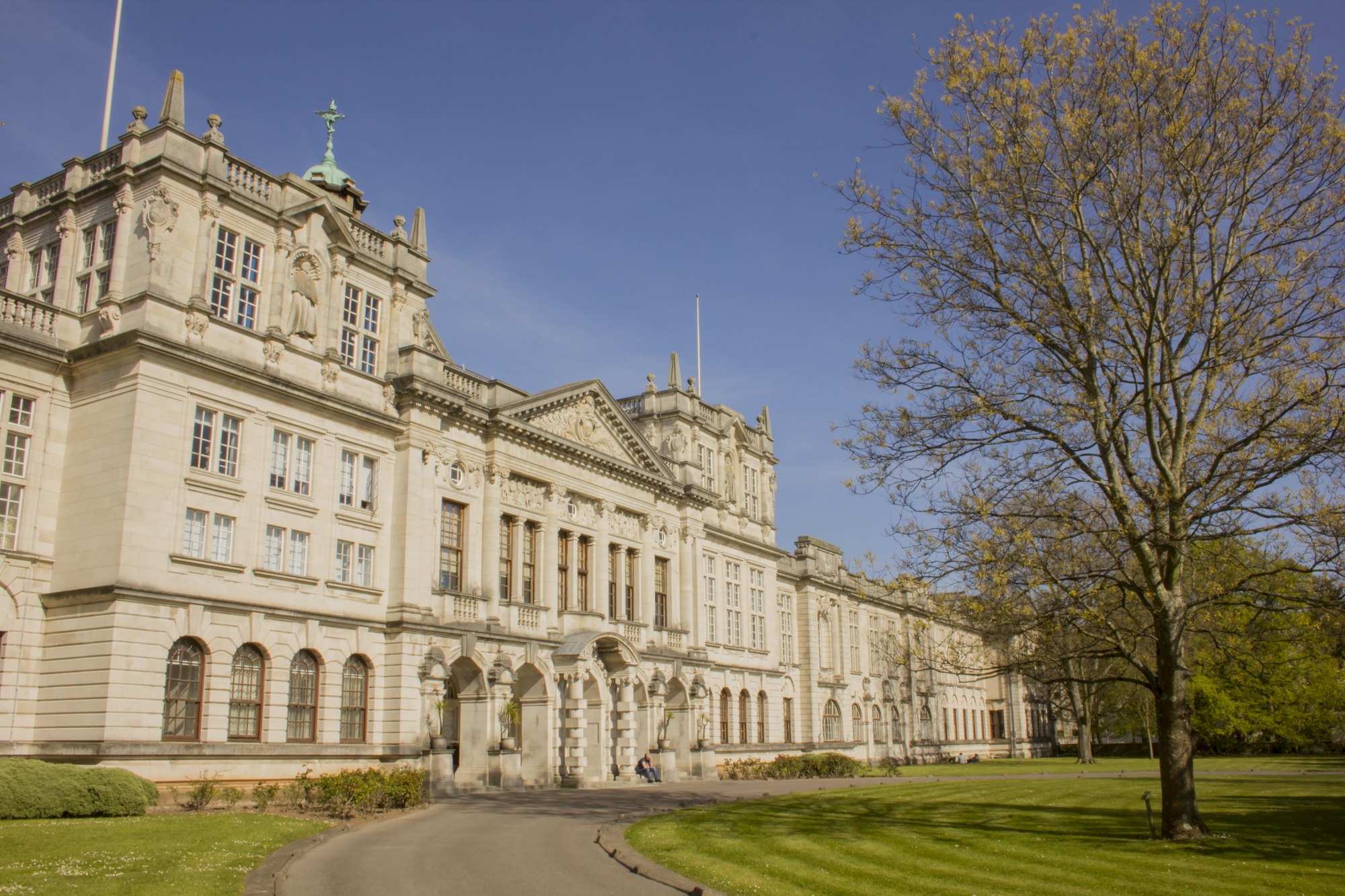
Featured image: Main Building, Cardiff University by Jeremy Segrott, CC BY 2.0, via Wikimedia Commons.

Dr Elena Zolotariov is the Mapping the Arts and Humanities Liaison Officer at the School of Advanced Study, University of London.
Dr Giovanna Di Martino is Community and Project Manager for Data/Culture at Oxford and Postdoctoral Researcher at Computational Humanities Lab (Regent’s Park, Oxford).

RESHAPED: Building Infrastructure for Humanities Training
In this companion piece to the Mapping the Arts and Humanities Podcast, Niilante Ogunsola-Ribeiro and Simon Parr explore how RESHAPED, a free peer-reviewed training platform hosted at the School of Advanced Study (SAS), University of London is building connected learning pathways across the humanities.

Mapping Openness and AI: Insights from the AI and Openness Workshop for the Arts and Humanities (Part 1)
Sinem Görücü / Silicon Landscapes / Licenced by CC-BY 4.0Following the “AI and Openness” workshop,...

UK DARIAH Day 2025: Imagining Future Digital Research Infrastructures
As the landscape of arts and humanities research becomes increasingly digitised, the necessity for...

Creating Living Systems Fit For Purpose: RESHAPED and the Future of Research Training
The Mapping the Arts and Humanities team sat down with SAS learning technologists Niilante...

Creative methods in research: how innovative arts-led approaches are driving changes across law, policing, and the humanities
Creative and arts-led methods are currently gaining ground in socio-legal and humanities research,...

Machine Encounters: Introduction to “Whose Bias”
“Machine Encounters” introduces “Whose Bias?”, a collaborative event offering a playful, hands-on introduction to AI and machine learning. Using toys and snacks as data, participants explored how bias emerges in machine learning processes. Emphasising accessibility and curiosity, it reflects on the importance of combining software enginneer and humanities-led approaches to demystifying AI technologies through inclusive, low-barrier participatory activities.

Learned Societies: English Association
The Mapping the Arts and Humanities project is bringing learned societies together, fostering collaboration, and amplifying the vital role of arts and humanities research. The English Association, alongside its partners, is working to support researchers, advocate for the subject, and champion the power of interdisciplinary connections in an evolving landscape. Elizabeth Fisher, Elizabeth Draper, and Jenny Richards share their vision and expertise in the area.
Join our mailing list
Receive blogs as soon as they're published, along with project updates and event information, plus special access to digital tools to help you make the most of the dataset.